In his article “We Have Enough Declarations. Now What? A Critique from Inside Diamond OA,” Ramazan Turgut delivers a piercing critique of the scholarly communication landscape, arguing that the Diamond Open Access movement is suffering from “declaration inflation.” Turgut contends that the steady accumulation of non-binding manifestos and action plans creates a “participation illusion” of meaningful progress while institutional spending, hiring, and infrastructure realities remain stagnant. True advancement, he asserts, relies not on symbolic visibility, but on building concrete “publishing machines” backed by direct public funding, transparent governance, and enforceable, auditable metrics. Turgut’s call to move from rhetoric to structural action offers a vital lens for analyzing the sustainability of non-commercial publishing and serves as the foundation for the commentary below.
I would argue that change has been underway all along, with individuals, teams, and institutions paving the way toward equitable, affordable publishing models. And at the same time, we had to wait for technology to provide the necessary components that now allow us to take action on each of our commitments; all scholarly actors and stakeholders are accountable in each their realm: “[Funders for] sustainable funding, [institutions and editorial teams for] transparent governance, [scholarly infrastructure providers for] shared infrastructure, and [all of us] binding accountability”.
Adding to your list of best practice examples, I’d like to add Open Research Europe (ORE), The Open Pan-African Repository (OPAR), nd of course the disruption with the preprint self-publishing advocacy a couple of years ago (OSF, Zenodo, PubPub, …) which stirred up discussions and was followed by Open Peer Review Platforms (Peer Community In…, PREreview, …) and the Publish-Review-Curate Model pioneered by MetaResearch Open Review (MetaROR) and now formalized with the PRC Alliance.
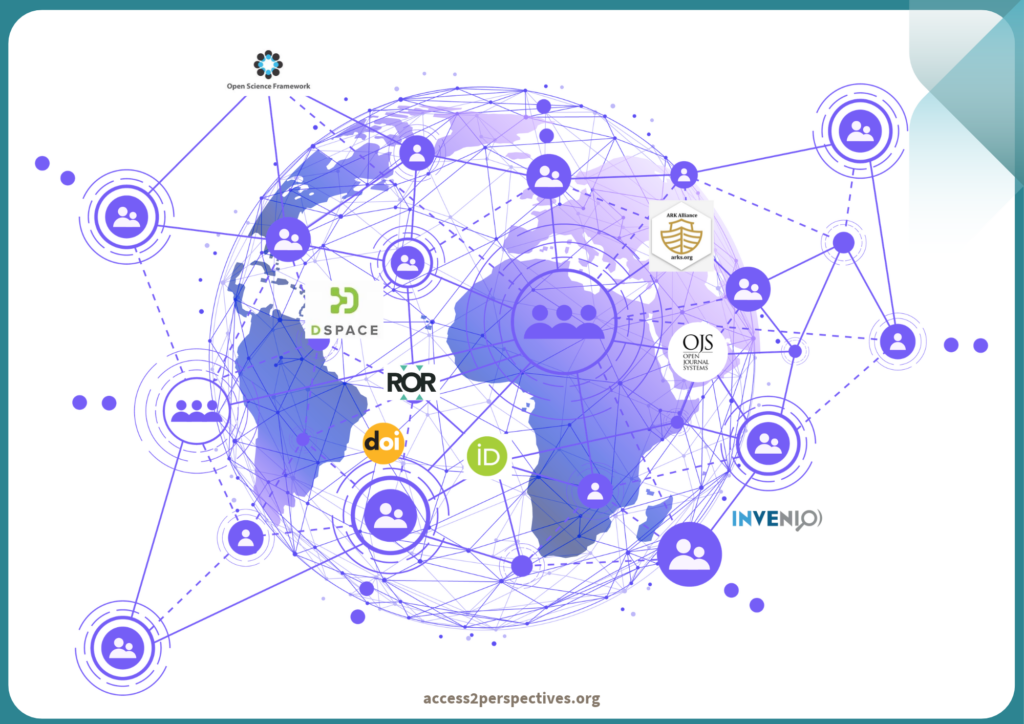
It took the required time and a lot of effort to build momentum and change the ingrained habits and regulations designed as a consequence of one of the world’s strongest marketing machine operators and those that followed his route of success (quick reminder: https://www.theguardian.com/science/2017/jun/27/profitable-business-scientific-publishing-bad-for-science). It also took time to optimize existing community-ed infrastructure such as DSpace, Invenio, Open Journal System (PKP/OJS) to become user-friendly for both the administrators as well as users, and last but not least for the Persistent Identifier (PID) community to get to one table and streamline their efforts which only effectively happened over the past 5 or so years.
So, instead of blaming the process, in which all these declarations give us direction and moral guidance, I would argue that each step, phase, and declaration had its necessary time and effort, which we all can now build upon. Nevertheless, Ranazan’s article is an essential call to action to dare us all to make use of what is now ready to plug-and-play with =)