
This week, we share how preprints and open scholarship are transforming African research, plus what to expect at UbuntuNet Connect 2025 and a must-listen podcast episode with Joy Owango.
Open Access Week 2025: Advancing Open Knowledge in Africa
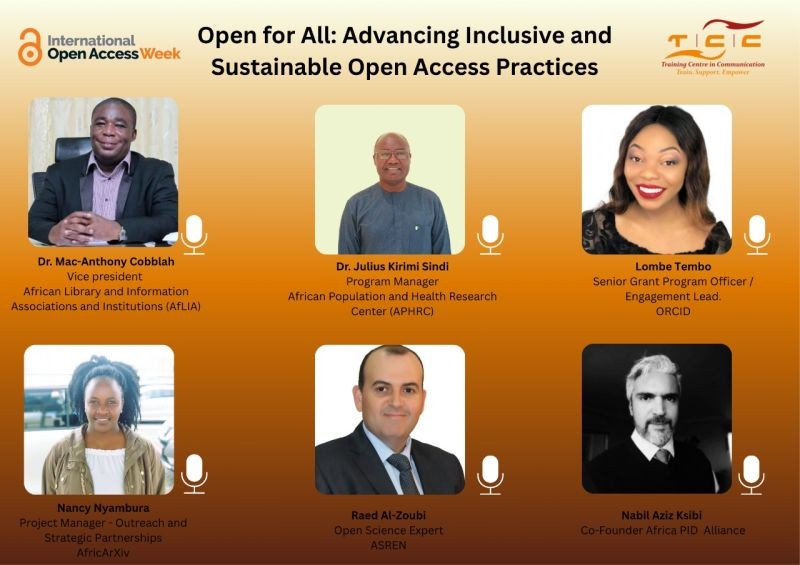
This week, Nancy Nyambura of our team joined the International Open Access Week celebrations—a movement dedicated to making research more inclusive, transparent, and accessible to all. Guided by the UNESCO Recommendation on Open Science (2021), this year’s theme highlights how open and equitable models of knowledge sharing can accelerate progress across Africa and beyond.
“I had the opportunity to speak during the TCC Africa Open Access Week Webinar, where I shared insights on ‘Preprints and Open Scholarship: Accelerating African Knowledge Dissemination.”
In my presentation, I explored how preprints and open scholarship are transforming the way African research is shared and accessed, helping researchers increase visibility, collaboration, and impact.”
View the presentation on AfricArXiv: TCC Africa Webinar – Preprints and Open Scholarship (AfricArXiv Perspective)
Toward Global Research Equity from an African Perspective
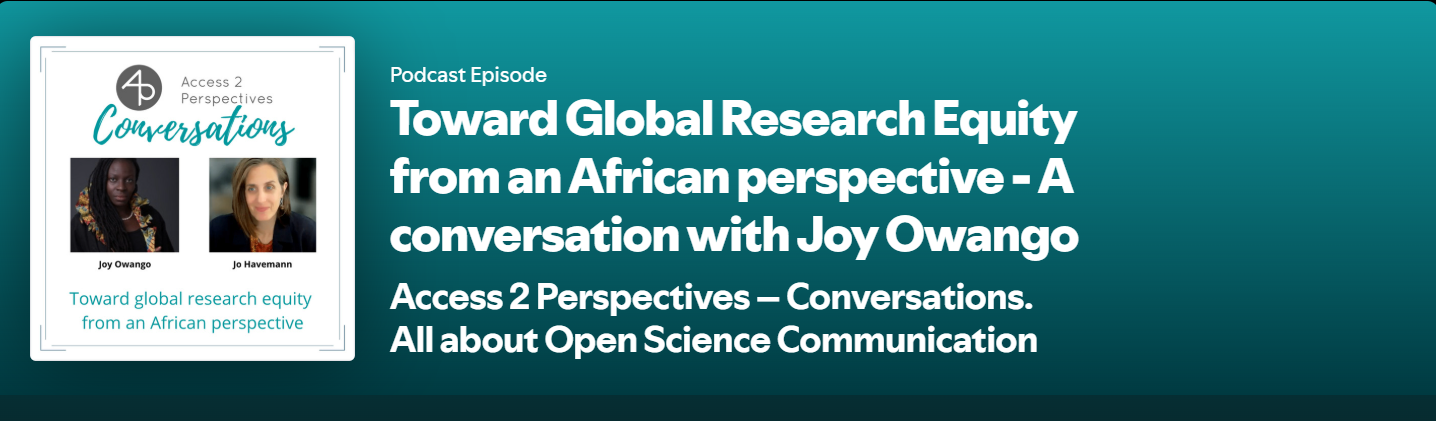
Guest: Joy Owango, Executive Director, TCC Africa
In this insightful conversation, Joy discusses how the scholarly community can work toward Global Research Equity, drawing from her vast experience in research capacity building and open data advocacy across Africa.
Listen to the full episode: A conversation with Joy Owango
Explore all our podcast episodes: A2P Conversations
Next Week: UbuntuNet Connect 2025

We are looking forward to the UbuntuNet Connect 2025 conference under the theme “Resilient and Sustainable Research and Education Networks for the Future.” The event will focus on strengthening research and education networks in Africa through connectivity, cybersecurity, sustainability, and inclusive access.
Be on the lookout for updates and highlights from the conference
Learn more: UbuntuNet Connect 2025
Research Health Check
The Research Health Check is a practical resource designed to help researchers assess the robustness, efficiency, and impact of their research practices. It offers tools and guidance to strengthen your workflows, ensure compliance, and maximize your research visibility.
Every researcher deserves the clarity and support to thrive, and this is one step toward that.
Research and Writing Skills
This section explores your ability to critically engage with academic literature, structure your writing for maximum impact, and navigate the complexities of the publishing process. These skills are essential for producing high-quality research and effectively communicating your findings.
- Critical Reading Strategies: How confident are you in analyzing and critically evaluating academic literature?
Take the full Research Health Check
A2P Course Catalogue

Our training programs are aligned with the UNESCO Open Science Recommendation and adhere to scholarly standards, principles, and best practices that facilitate global collaboration, transparency, and accessibility.
We offer tailored training and consulting for researchers, institutions, and organizations.
Navigating the Publishing Process
Understanding the scholarly publishing process is crucial for researchers seeking to share their findings, advance their careers, and contribute to their field. The publishing landscape is complex, with challenges ranging from selecting the right journal to navigating peer review. This course equips participants with the tools and strategies needed to confidently navigate this process, ensuring their work reaches the appropriate audience while adhering to ethical and professional standards.
Contents
- Introduction to Scholarly Publishing and its purpose and impact
- Choosing the Right Publication Outlet
- Best practices and considerations in Open Access Publishing
- Preparing Your Manuscript
- The different types of the Peer Review Process and responding to reviewers’ feedback
- Ethical Considerations: Avoiding Scientific Misconduct
- Authorship and contribution norms – CRedIT
- Post-publication metrics and tracking impact, citation metrics, stakeholder engagement
Objectives
- To provide a clear understanding of the scholarly publishing process and its key components.
- To equip participants with practical strategies for preparing, submitting, and revising manuscripts.
- To foster an awareness of ethical standards and best practices in academic publishing.
Outcomes
- Participants will identify suitable publication outlets that align with their research objectives.
- Participants will develop a well-structured manuscript ready for submission.
- Participants will navigate the peer review process effectively, including addressing feedback and managing revisions.
Explore our full Course Portfolio and discover more course topics.