
This edition features a recap of our 2023 and 2024 Open Science workshops in Uganda and Tanzania, as we prepare to share highlights from the 2025 Workshop for Librarians in Zimbabwe in next week’s newsletter. We also share the Open Access Week webinar recording along with the citation reference, and a must-listen podcast episode with Sergio Santamarina on persistent identifiers and global research equity.
Building Momentum: Open Science Workshops for Librarians in Africa
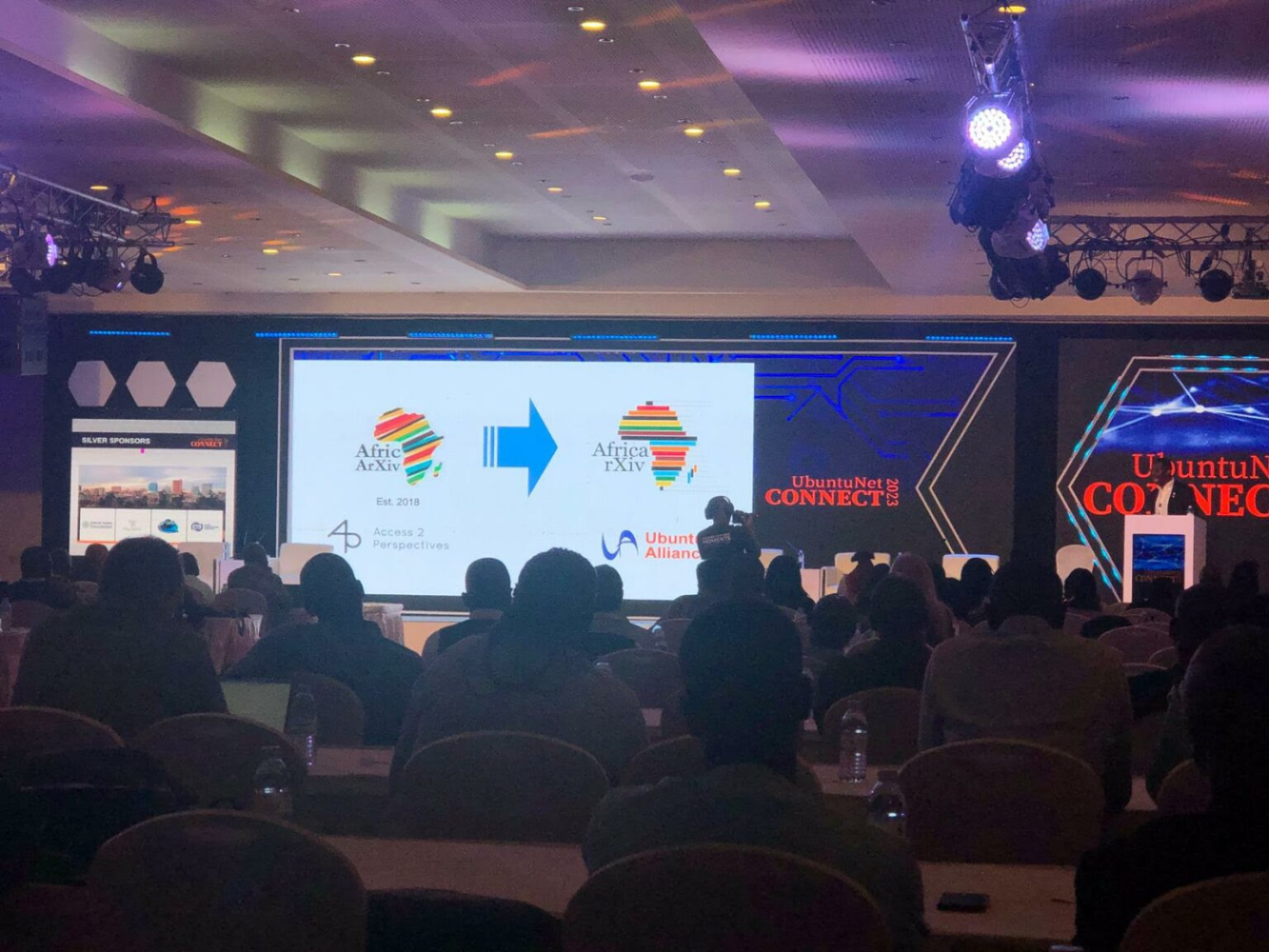
As we look ahead to sharing insights from our 2025 Open Science Workshop for Librarians held this week at UbuntuConnect 2025 in Zimbabwe, we take a moment to reflect on the remarkable journey that began with our previous workshops in Uganda (2023) and Tanzania (2024).
In 2023, during UbuntuNet Connect 2023 in Kampala, Uganda, Access 2 Perspectives collaborated with the UbuntuNet Alliance under the AfricaConnect3 project to host a one-day Open Science Training for Librarians. Twenty librarians from across the region explored the FAIR principles- Findable, Accessible, Interoperable, and Reusable—and learned to navigate identifiers such as ORCID, ROR, and DOI. The workshop concluded with the landmark launch of AfricArXiv, the African preprint repository, marking a milestone in advancing equitable and accessible research across the continent.
Building on that success, in 2024, UbuntuNet Connect 2024, we joined the Zambia Research and Education Network (ZAMREN) Week & Annual General Meeting to deliver another Open Science workshop on Open Data and Open Repositories. The session deepened collaboration between librarians and open science advocates.
These workshops underscore our shared vision: empowering librarians as key enablers of open, connected, and community-driven research ecosystems in Africa.
Stay tuned this week as we highlight outcomes and key takeaways from the 2025 workshop in Zimbabwe!
Open Access Week 2025: Advancing Inclusive and Sustainable Open Access Practices

Recordings for the Open Access Week webinar,
“Open for All: Advancing Inclusive and Sustainable Open Access Practices” is now available
It was held as part of International Open Access Week 2025, the session brought together experts and stakeholders to discuss practical approaches for advancing equity, inclusivity, and sustainability in Open Access.
Watch the full recording here: https://doi.org/10.21428/359fb1d2.7cb89bbc
Cite Sindi, Dr. J. (2025). Open for All: Advancing Inclusive and Sustainable Open Access Practices. TCC Africa. https://doi.org/10.21428/359fb1d2.7cb89bbc
View the presentation by AfricArXiv: TCC Africa Webinar – Preprints and Open Scholarship (AfricArXiv Perspective)
Identifiers and Inequality: Reassessing PIDs Through a Global Equity Lens
Guest: Sergio Santamarina, Librarian, National University José Clemente Paz (UNPAZ), Argentina
In this conversation, Sergio explores how the scholarly community can work toward global equity in open science. Drawing from his experience in Latin America, he and Jo discuss the financial and structural barriers around obtaining Digital Object Identifiers (DOIs), often costing around US$250 annually plus US$1 per article, and how these reinforce dependency on European repositories.
Sergio advocates for regional DOI minting systems that reflect local economic realities and support community-driven infrastructures. The discussion highlights the crucial role of libraries in advancing open science, the need for diverse regional databases, and equitable access to scholarly publishing.
Read Sergio’s book chapter: Santamarina, S. (2025). Persistent Identifiers: The Achilles’ Heel of Open Science. CLACSO. https://doi.org/10.5281/zenodo.15803055
Explore this episode: https://access2perspectives.org/2025/07/a-conversation-with-sergio-santamarina/
Research Health Check
The Research Health Check is a practical resource designed to help researchers assess the robustness, efficiency, and impact of their research practices. It offers tools and guidance to strengthen your workflows, ensure compliance, and maximize your research visibility.
Every researcher deserves the clarity and support to thrive, and this is one step toward that.
Research and Writing Skills
This section explores your ability to critically engage with academic literature, structure your writing for maximum impact, and navigate the complexities of the publishing process. These skills are essential for producing high-quality research and effectively communicating your findings.
2. Writing from a Reader’s Perspective: Do you find it challenging to structure your writing in a way that engages and informs your target audience?
a) Always (1)
b) Sometimes (2)
c) Rarely (3)
d) Never (4)
Take the full Research Health Check
A2P Course Catalogue

Our training programs are aligned with the UNESCO Open Science Recommendation and adhere to scholarly standards, principles, and best practices that facilitate global collaboration, transparency, and accessibility.
We provide customized training and consulting services for researchers, institutions, and organizations.
Scholarly Writing from a Reader’s Perspective
Scholarly writing is a cornerstone of academic communication, but its effectiveness depends on the reader’s ability to engage with and comprehend the text. This course emphasizes writing strategies that prioritize clarity, coherence, and purpose from the reader’s perspective. By adopting the reader’s viewpoint, scholars can craft more accessible and impactful texts, enhancing their contribution to academic discourse. This approach not only improves writing but also facilitates greater understanding and collaboration across disciplines.
Contents
- Identifying the needs, expectations, and expertise of academic readers.
- Strategies for establishing context, significance, and the “roadmap” of your writing.
- Establish a logical Flow to structure arguments and ensure seamless transitions between ideas.
- Balancing detail and conciseness while integrating sources in a reader-friendly way.
- Writing with Precision and Clarity to enhance readability.
- Reviewing drafts to align with reader expectations.
- Utilizing feedback effectively to refine writing for diverse audiences.
Objectives
- Equip participants with techniques to analyze scholarly writing from the perspective of an academic reader.
- Enable participants to adapt their writing for clarity, coherence, and engagement with their target audience.
- Foster an understanding of the interplay between structure, argumentation, and readability in scholarly texts.
Outcomes
- Participants will be able to assess and improve their writing by anticipating and addressing potential reader challenges.
- Participants will create scholarly texts that communicate complex ideas to diverse academic audiences.
- Participants will develop a systematic approach to revising and refining their work with a focus on reader-centered effectiveness.
Explore our full Course Portfolio and discover more course topics.