
In this week’s issue, we reflect on our time at UbuntuNet-Connect 2025 in Harare, Zimbabwe, where we facilitated the Open Science Workshop for Librarians. You will find highlights from the workshop, links to the photo gallery and conference presentations, details on our upcoming webinar on AI in Open Science and research management, and a featured podcast exploring resilience in scholarly publishing. We also share a preview of our Course Catalogue and Research Health Check resources, there is plenty to explore this week!
UbuntuNet Connect 2025
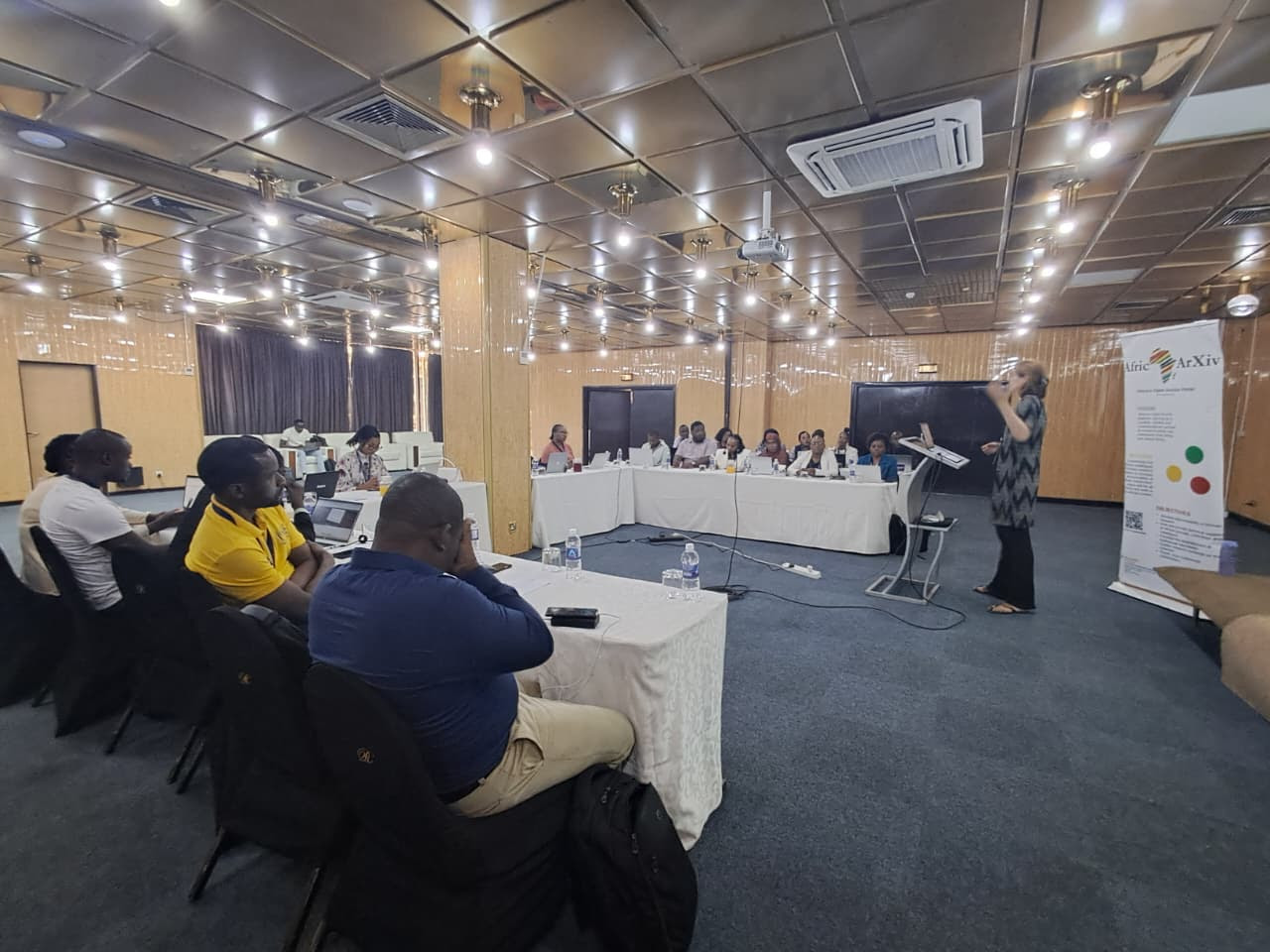
At the 2025 Open Science Workshop for Librarians held this week at UbuntuConnect 2025 in Zimbabwe, we had the opportunity to once again facilitate the Open Science Workshop on 29th November in Harare, Zimbabwe, during UbuntuNet-Connect 2025, themed “Resilient and Sustainable Research & Education Networks for the Future.” The conference sessions followed, from 30th to 31st November, bringing together researchers, librarians, and network professionals from across the region.
Our discussions explored how Open Science, AI, and inclusive research practices can strengthen Africa’s research ecosystem. We’ve put together a short summary highlighting key takeaways from FAIR and CARE principles to ideas for sustainable collaboration.
This is just the beginning! The conference and workshop offered a wealth of reflections and takeaways, and we will continue sharing more insights and stories in the coming weeks, including the final published version on AfricArXiv next week.
Photos from the conference are now available for viewing here: UbuntuNet-Connect 2025 Photo Gallery
Additionally, conference presentations are being uploaded to AfricArXiv. While not all are available yet, you can already access many of them there. Please keep checking back as we continue to update the collection. View Conference Presentations
Upcoming Webinar: Advancing Open Science and Research Management with ScienceOS
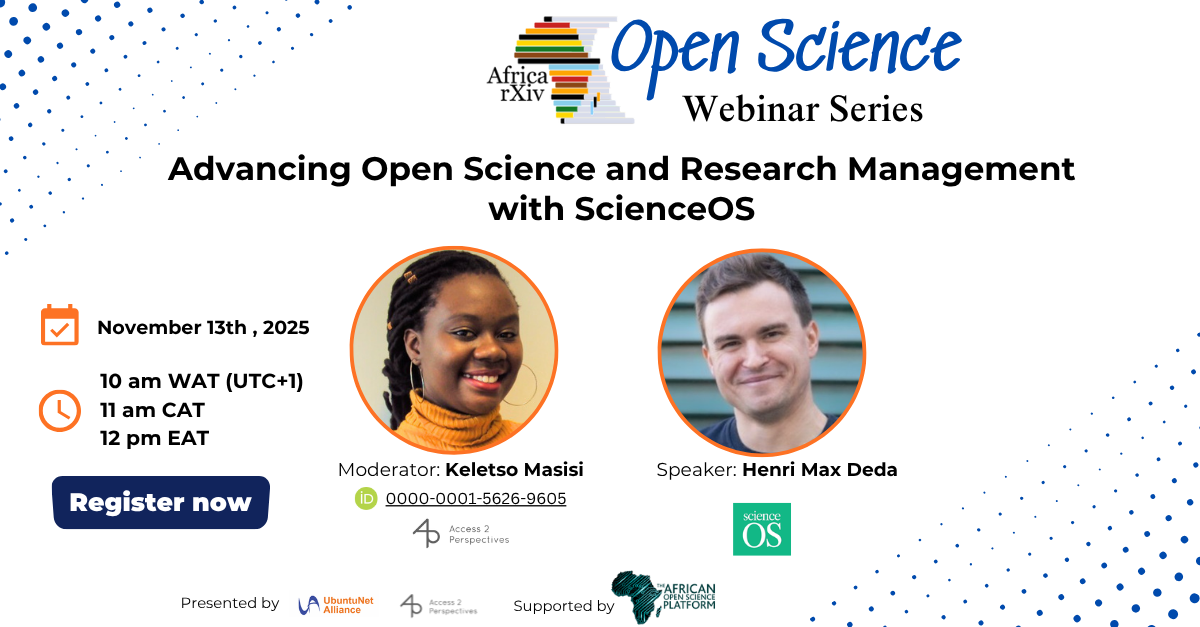
Join us on November 13, 2025 (12:00 PM EAT | 11:00 AM CAT) for an insightful session with Henri Deda, introducing scienceOS.ai – an AI-powered platform transforming how researchers discover, collaborate, and share knowledge.
This session will explore how scienceOS.ai can support Open Science across Africa, making research more transparent, accessible, and efficient.
Register here: https://forms.gle/4w5BSAvmSqaQjYaq5
Resilience in Scholarly Publishing
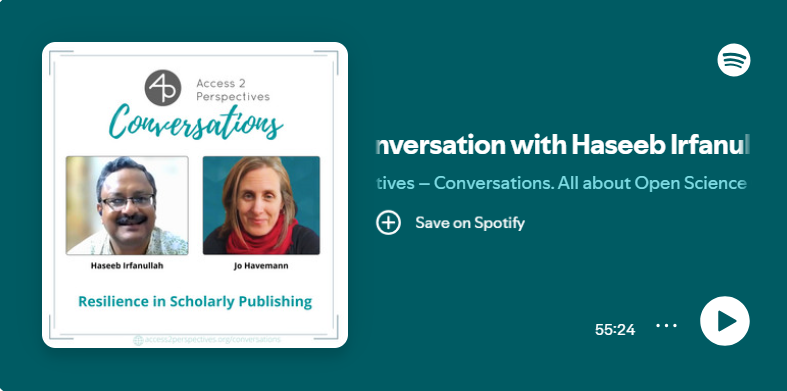
In this podcast episode, Dr. Haseeb Md. Irfanullah joins Jo to explore what resilience means in the context of scholarly publishing, not just surviving disruptions, but learning, adapting, and transforming through them.
Dr. Haseeb is a biologist-turned-development facilitator and self-described research enthusiast with over 25 years of experience working with international organizations, research institutions, funders, and government agencies. He currently serves as a Council Member of the European Association of Science Editors (EASE), Associate Editor at Learned Publishing, Associate at INASP, and Chef at The Scholarly Kitchen.
Listen to the conversation: Resilience in Scholarly Publishing
Read his article: Understanding Resilience in Scholarly Publishing
Research Health Check
The Research Health Check is a practical resource designed to help researchers assess the robustness, efficiency, and impact of their research practices. It offers tools and guidance to strengthen your workflows, ensure compliance, and maximize your research visibility.
Every researcher deserves the clarity and support to thrive, and this is one step toward that.
Research and Writing Skills
This section explores your ability to critically engage with academic literature, structure your writing for maximum impact, and navigate the complexities of the publishing process. These skills are essential for producing high-quality research and effectively communicating your findings.
3. Navigating the Publishing Process: What is your biggest challenge in the academic publishing process?
a) Identifying suitable journals
b) Understanding submission guidelines
c) Responding to peer reviews
Take the full Research Health Check
A2P Course Catalogue

Our training programs are aligned with the UNESCO Open Science Recommendation and adhere to scholarly standards, principles, and best practices that facilitate global collaboration, transparency, and accessibility.
We provide customized training and consulting services for researchers, institutions, and organizations.
Critical Reading Strategies in Academia
The ability to critically analyze texts is crucial for engaging with scholarly work, forming well-reasoned arguments, and contributing meaningfully to academic discourse. Critical reading goes beyond comprehension; it requires evaluating the credibility, structure, and implications of a text. This course equips participants with the skills to approach academic texts strategically, fostering deeper understanding and promoting intellectual independence.
Contents
- Understanding the Foundations of Critical Reading
- Effective Pre-Reading and Skimming
- Recognizing biases, assumptions, and perspectives in texts.
- Analyzing Argumentation and Evidence strength and validity
- Understanding citation practices and their implications.
- Cross-referencing and synthesizing multiple sources.
- Formulating Critical Questions that deepen understanding and challenge ideas.
- Strategies for Annotating and Note-Taking
- Using critical reading insights to support academic writing.
Objectives
- Equip students with methods to efficiently navigate and interpret complex academic texts.
- Enable the evaluation of arguments and evidence for logical consistency and credibility.
- Foster the ability to generate critical questions and connections between multiple academic sources.
Outcomes
- Students will demonstrate the ability to critically assess the validity and reliability of scholarly texts.
- Students will create organized and insightful annotations that facilitate academic discussions.
- Students will integrate critical reading insights into their academic writing to strengthen arguments.
Explore our full Course Portfolio and discover more course topics.