
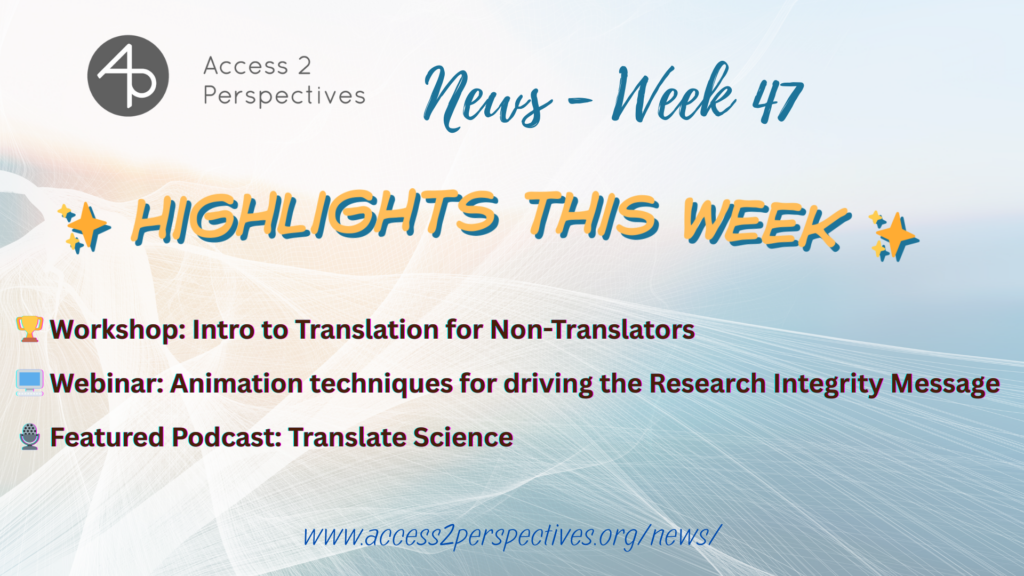
In this week’s edition, we highlight the upcoming “Intro to Translation for Non-Translators” workshop at Charleston Conference Asia 2026, building on the momentum from FSCI 2025 and advancing multilingual open scholarship. We also feature one of our earlier podcast conversations with the Translate Science team — a meaningful discussion honouring the late Victor Venema while exploring the importance of multilingualism in research. Additionally, we share this week’s recommended reading resources on language diversity in academia.
Finally, we include a preview of our Course Catalogue and the Research Health Check questionnaire.
Workshop: Intro to Translation for Non-Translators (Charleston Conference Asia 2026)
Multilingual open science is rapidly expanding, and Charleston Conference Asia 2026 will feature a workshop in January 2026 (Bangkok + online), building on the 2025 FSCI session, “Working towards Open Scholarship in the Age of Intelligent Automation.” The workshop will explore how translation, both linguistic and cultural, intersects with digital tools and scholarly communication.
At Access 2 Perspectives, we advocate for language diversity in academia and support multilingual workflows through practical tools and resources. The workshop will address everyday questions researchers face and where translation services fit within the research ecosystem.
Facilitators include Dr. Johanna Havemann, Jennifer M. Miller, Lynne Bowker, Oliver Czulo, Wichaya Pidchamook, and Danny Chan.
Resources: Access our Multilingualism in Academia Page
Learn from the first workshop: Insights from the FSCI 2025 session
Register: Sign up for the January 2026 workshop
Webinar: Driving the Research Integrity Message Through whiteboard doodle animation techniques
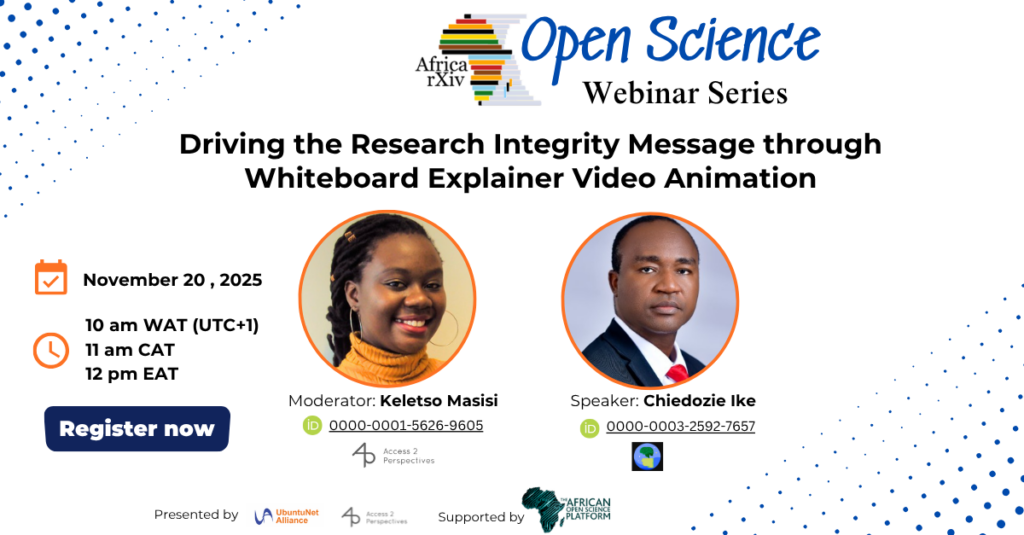
Speaker: Dr. Chiedozie Ike- Research Integrity Desk Officer at Ambrose Alli University, CoARA representative, bioethics educator, and 2024 Anderson-Kleinert Diversity Award recipient.
Learn how whiteboard explainer animations can simplify and strengthen research integrity communication. Dr. Ike shares practical tips, examples, and tools for turning ethical principles into clear, engaging visuals.
Highlights:
- Why animation improves ethics education
- How to design simple, inclusive animated messages
- Tools and steps to build your own explainer content
For: Researchers, editors, librarians, OSC practitioners, ethics educators, and students.
Explore the AfricArXiv Open Science Webinar Series
Featured Podcast: Translate Science
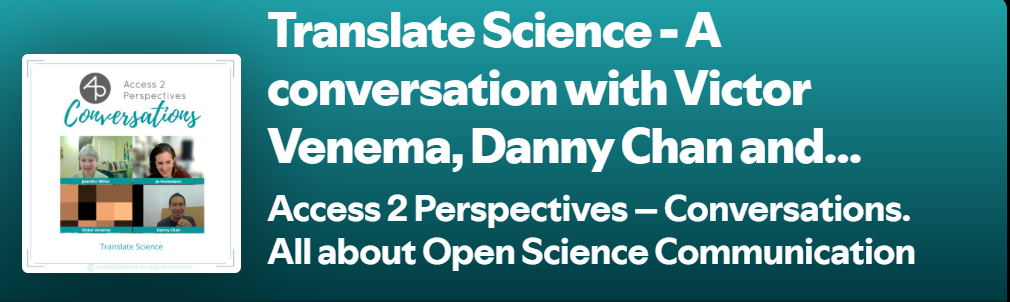
A Conversation with Jennifer Miller, the Late Victor Venema, and Danny Chan.
We highlight a meaningful episode from our Conversations podcast series featuring members of Translate Science, a working group dedicated to improving access to translated scientific knowledge.
In this discussion, Jennifer Miller, the late Victor Venema, and Danny Chan reflect on why multilingualism matters in research, how translation supports global knowledge equity, and the tools and practices needed to make scientific outputs more accessible across languages.
Shortly after the recording in late 2022, we received the sad news of Victor Venema’s passing. We share this episode in honour of his contributions and lasting advocacy for inclusive, multilingual science.
Listen to the episode: Translate Science
Explore more A2P podcast conversations: access2perspectives.org/conversations/
Research Health Check
The Research Health Check is a practical resource designed to help researchers assess the robustness, efficiency, and impact of their research practices. It offers tools and guidance to strengthen your workflows, ensure compliance, and maximize your research visibility.
Every researcher deserves the clarity and support to thrive, and this is one step toward that.
Collaboration and Data Management
Collaboration and data management are critical for modern research, especially in global and interdisciplinary contexts. This section examines your experience with managing international collaborations and your familiarity with FAIR principles for research data.
5. Project Management for Global Research Collaboration:
Have you faced difficulties in managing international research collaborations?
a) Yes, frequently (1)
b) Occasionally (2)
c) Rarely (3)
d) Never (4)
Take the full Research Health Check
A2P Course Catalogue
Our training programs are aligned with the UNESCO Open Science Recommendation and adhere to scholarly standards, principles, and best practices that facilitate global collaboration, transparency, and accessibility.
We provide customized training and consulting services for researchers, institutions, and organizations.
Open Science Practices
1.2. Digital Tools and Platforms for Open Science Practices
Digital tools are essential for facilitating Open Science practices and effective research outcome dissemination. This course provides hands-on training in selected tools and platforms that support Open Science, enabling researchers to implement best practices in data sharing and collaborative research.
Contents
❖ Repository Systems for rapid and effective research dissemination.
❖ Data Repositories for storing, sharing, and preserving research data.
❖ Researcher Profiles and Collaboration Tools for organizing research and building networks.
❖ FAIR Data Principles for making data Findable, Accessible, Interoperable, and Reusable.
❖ Open Licensing Options and Legal Frameworks for sharing research outputs.
Objectives
❖ Gain proficiency in digital scholarly tools like ORCID, Zotero, and Zenodo.
❖ Understand the FAIR Principles as a requirement for collaboration and dissemination of research.
❖ Learn to use repository platforms effectively.
Outcomes
❖ Effective use of digital Open Science tools in research.
❖ Improved data management and sharing capabilities.
❖ Broader dissemination of research through open platforms.
Explore our fullCourse Portfolio and discover more course topics.