
When we started our Open Science training with librarians, we kept coming back to one powerful statement that laid the foundation for the training: science is a shared human right, the foundation of the Open Science movement. The Universal Declaration of Human Rights (Article 27.1) says that everyone has the right “to participate in the cultural life of the community, to enjoy the arts and to share in scientific advancement and its benefits.”
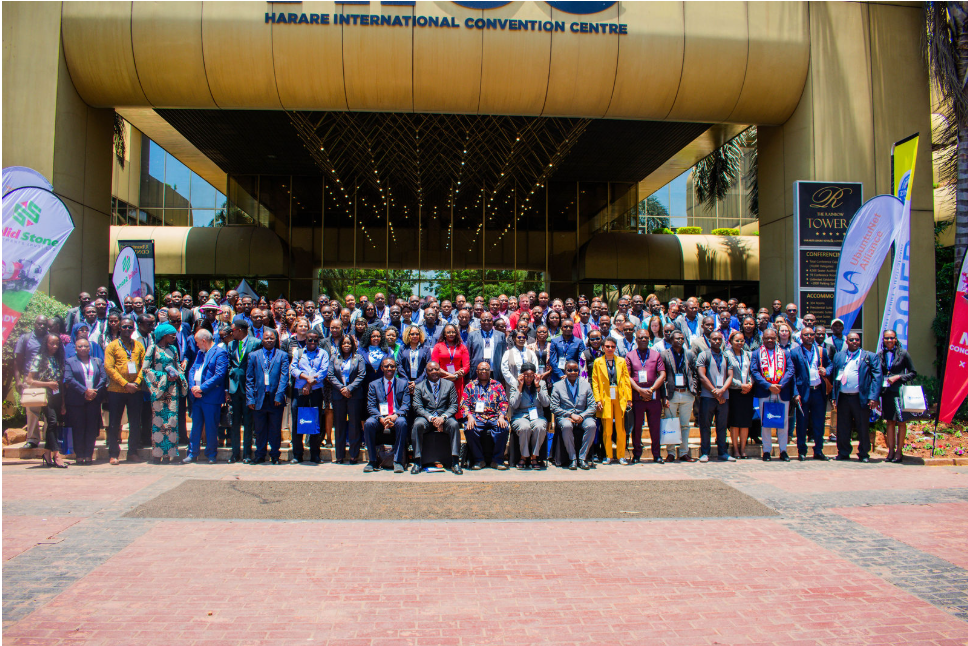
The UbuntuNet-Connect 2025 Conference, held in Zimbabwe under the theme “Resilient and Sustainable Research & Education Networks for the Future,” built on this same spirit. It brought together people from across the research and education communities to discuss how we can make science more open, inclusive, and sustainable.
Below are the combined lessons and respective resources I gathered from our librarians’ workshop and sessions that followed the conference. They reflect shared hopes, practical insights, and action points for building stronger, fairer, and more connected research communities across Africa.
Takeaways & Highlights from Sessions.
- Navigating the FAIR & CARE frontier: https://www.go-fair.org/fair-principles/
- FAIR principles represent the technical and data management aspect of Open Science
- CARE principles apply broadly and represent the human, cultural, and ethical side- FAIR helps us manage data, CARE ensures we manage with integrity
- Implementation of the FAIR & CARE principles requires
- Dedicated training for librarians and researchers
- Adaptation to local contexts- there is no adoption without adaptation.
- A significant amount of research output across Africa remains uncurated; there is an emphasis on the need for funding and adequate staffing to close this gap.
- Countries should dedicate a significant portion of their budgets to Research and Development to facilitate this. The Kenyan government currently provides 0.8% of the GDP to funding research and innovation. This represents about Sh100 billion. This makes Kenya Africa’s second biggest spender on research and development after South Africa, which commits 0.85 per cent of its GDP. https://www.nacosti.go.ke/2024/05/12/state-climbs-down-on-research-funding/
- The role of Librarians in Institutions:
- Librarians are drivers of FAIR principles, while researchers are practitioners.
- Insufficient staff training to address resistance to data sharing remains a key challenge.
- Librarians were encouraged to:
- Advocate for Open Science awareness.
- Include policy briefs in their institutional workflows.
- Facilitate training and repository management at their institutions.
- Join international communities for networking and knowledge sharing.
- Inclusivity in Open Science is essential; we should ensure accessibility for all researchers regardless of ability and language.
- Embracing the AI Revolution: Implications for Research and Education.
- Prof Arthur Mutambara delivered the keynote on this topic.
- AI should reflect African values and ethics, not simply replicate Western or the Far East (Chinese) systems.
- Africa must invest collectively in AI development as AI is now the economy. Leading economies are those that use AI, and responsibly, for that matter.
- We should;
- Reskill and upskill the workforce.
- Promote learning, unlearning, and relearning.
- Embed AI literacy, problem-solving, and digital skills, and more in curricula.
- Avoid banning AI; instead, we can incorporate the grading of prompts to maintain critical thinking.
- We know that AI systems have their limitations; let us be creators of our own systems, so they also reflect our values
- Ask yourself how you can become a better professional because of AI?
- To embrace AI, we need awareness, the right mindset, budgets, and infrastructure.
- Continuous learning, inclusive design, and adaptive policies are essential for Africa’s digital and research future
- Prof Arthur Mutambara delivered the keynote on this topic.
- Sustainable Open Science ecosystems require human-centred governance, technological infrastructure, and financial commitment at national and institutional levels.
- Collaborations between NRENs, Libraries, researchers, and policy makers are vital in driving the conversation forward and implementation
- Librarians should include a policy brief section in their institutions; this will help connect research outcomes to decision-making and encourage evidence-based policies within academic settings.
- We should strive to deposit research output in local languages, promoting multilingualism. Doing so will ensure that knowledge is accessible to all, strengthen local engagement, and support indigenous scholarship.
- Review your country’s AI policy or Strategy- Kenya’s AI strategy: https://www.ict.go.ke/sites/default/files/2025-03/Kenya%20AI%20Strategy%202025%20-%202030.pdf
- Look up the national constitution for science communication in your country.
- The Constitution of Kenya 2010 promotes cultural expression through various means, including science and communication. It recognizes the role of science and indigenous technologies in national development and promotes intellectual property rights related to traditional knowledge.
- Additionally, the Science, Technology, and Innovation Act (2013) regulates scientific research in Kenya and facilitates its coordination and promotion, which indirectly supports science communication. The Act requires licensing for research and emphasizes protecting community culture, environment, and intellectual property.: https://www.nacosti.go.ke/nacosti/Docs/Information%20Centre/Science-Technology-and-Innovation-Act-No.-28-of-20131.pdf
- UNESCO Open Science Recommendation, A global framework that promotes inclusive and equitable access to scientific knowledge and collaboration: https://www.unesco.org/en/open-science/about
If there’s one thing this conference made clear, it’s that many institutions are ready for Open Science but need structured support to implement it in ways that actually work. From setting up or refining repositories to aligning with FAIR and CARE principles, to developing institutional policies, and that is where we come in.
- Work with us
We support institutions with practical Open Science implementation, from strategy and policy to repository optimisation and training. Let’s design a strategic approach toward Open Science practices in your research department. → Explore our services - A2P Impact Program: Expression of Interest.
Join a global community of researchers who turn their ideas into published, FAIR & CARE-compliant research while protecting their well-being, focus, and personal life. → Express interest - Strengthen your team’s capacity
Build in-house expertise through targeted training with our signature courses. We can curate more topics into tailored training and consulting packages for your specific research setting and requirements. → View our Course Catalogue
These takeaways and resources shared here are a starting point. We invite you to explore them, reflect on what resonates, draw your own conclusions, and build on this knowledge in ways that shape your own practice and perspective.