

Welcome to this week’s edition of our newsletter! We are a training and consulting organization for globally inclusive research and science communication, connecting research communities worldwide through open knowledge, collaboration, and shared learning.
Official Report Out: Open Science Conference 2025 on AI & Open Science
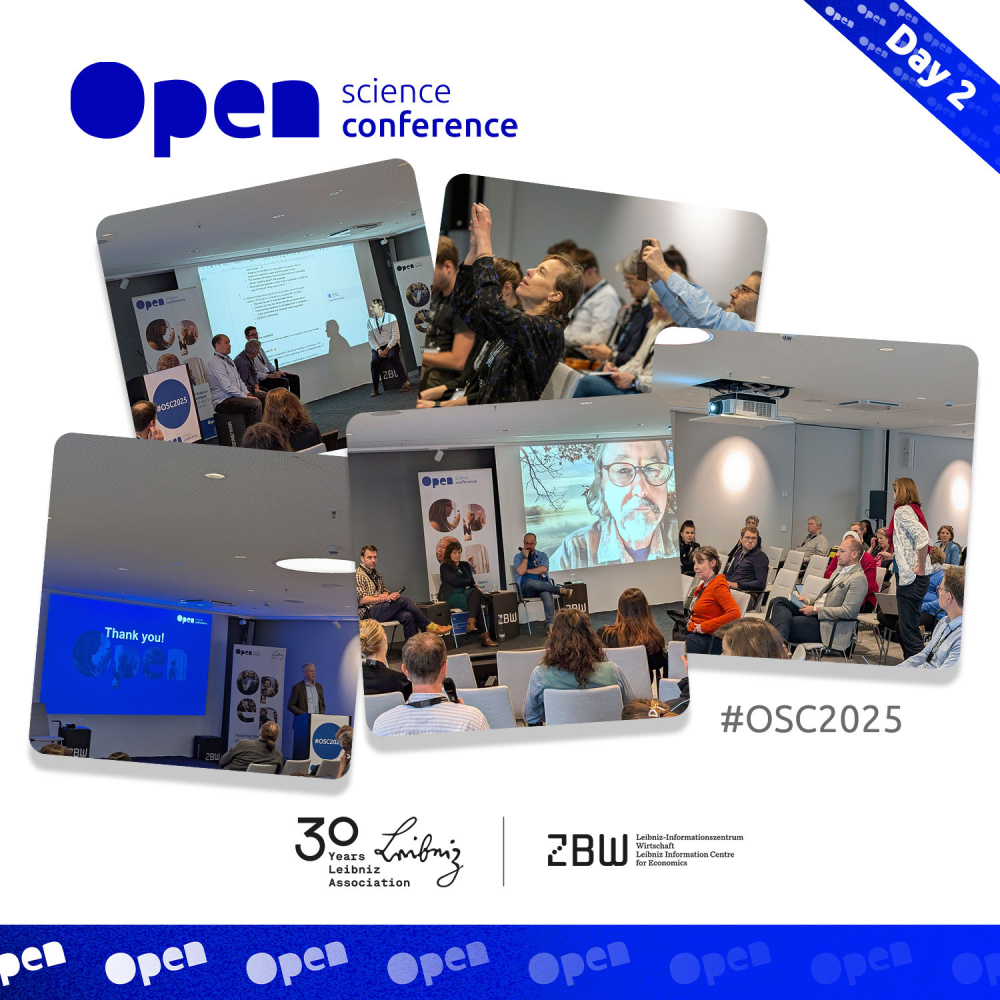
The official report by ZBW for the Open Science Conference 2025 is now out, capturing the key conversations, tensions, and opportunities at the intersection of Open Science and Artificial Intelligence. The conference took place from 8–9 October 2025, bringing together over 200 participants from 27 countries in Hamburg and online to explore how AI can be responsibly integrated into research.
One of the featured sessions in the report is “AI in Peer Review: Promise, Pitfalls, and Practical Pathways,” led by Dr. Johanna Havemann (Access 2 Perspectives) and Tim Errington (Center for Open Science), with remote support from Nancy Nyambura (Access 2 Perspectives). The session used a live, rotating hot-seat panel format that encouraged open and spontaneous discussion from the audience.
The report includes Dr. Jo’s reflections from the session. She highlights both the promise and the risks of using AI in peer review, from language editing, screening, and reviewer matching, to serious concerns around bias, transparency, intellectual property, and over-reliance on automation. A strong theme throughout was the need for a “human-in-the-loop” approach, where AI supports, but never replaces, expert judgement.
Explore all the sessions: ZBW Report
Link to Nyambura’s takeaways from the session
Webinar Recording: Democratizing Knowledge through Diamond Open Access
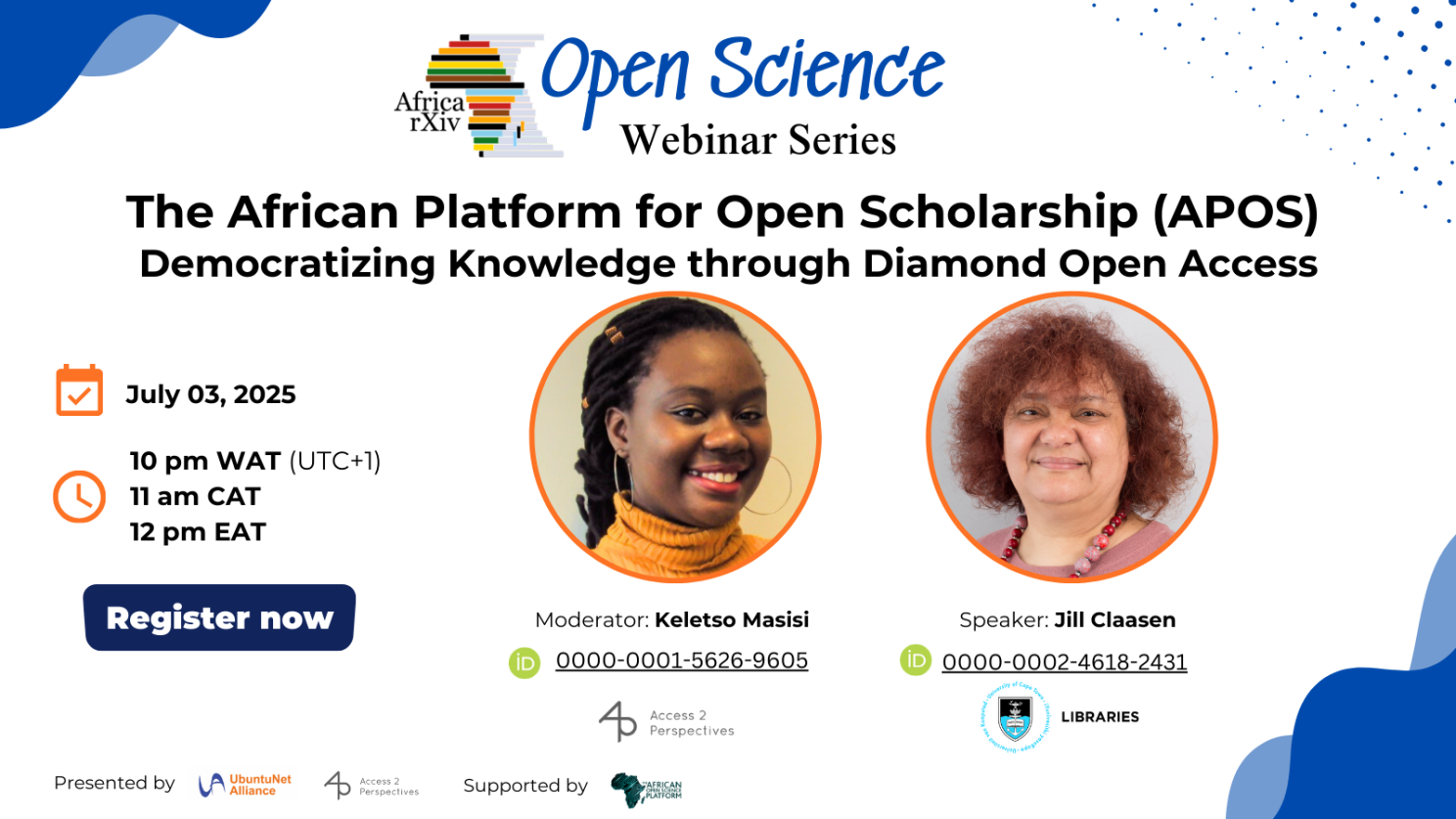
Guest Speaker: Jill Claassen
If you missed our webinar on Democratizing Knowledge through Diamond Open Access, the recording is available. In this insightful webinar, Jill Claassen (UCT Libraries) shared how APOS is helping democratize African scholarship through Diamond Open Access, multilingual publishing, and collaborative infrastructure.
The African Platform for Open Scholarship (APOS) is a groundbreaking initiative designed to amplify African research through open and inclusive scholarly communication. Discover how APOS is transforming access, visibility, and collaboration across the continent’s research landscape. This session features insights into the platform’s goals, functionalities, and its role in building a robust, equitable knowledge ecosystem in Africa.
Watch the full webinar recording
Explore the AfricArXiv Open Science Webinar Series
Podcast Feature: Helicopter Research.
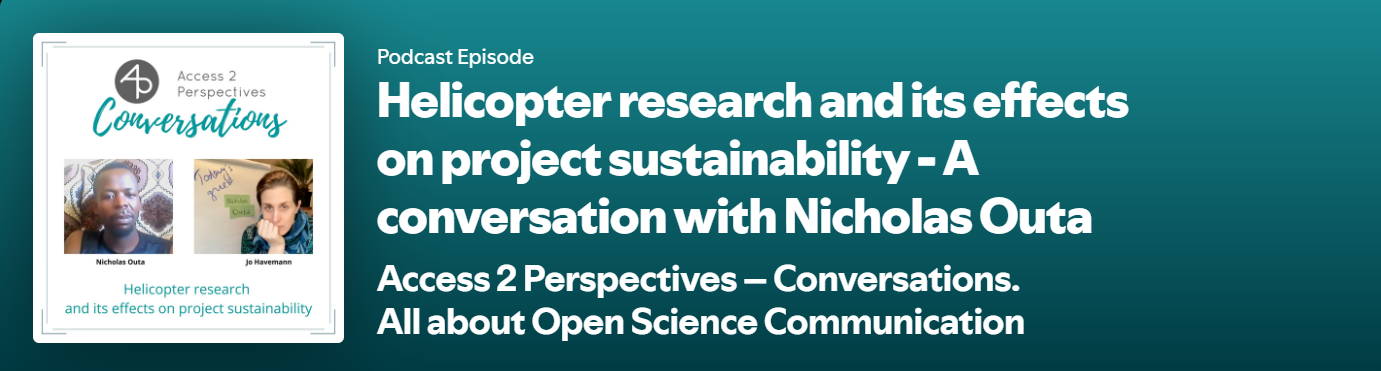
A conversation with Nicholas Outa
In this episode of Access 2 Perspectives Conversations, Nicholas Outa, a PhD student at Maseno University, Kenya, talks about helicopter research and how it affects local communities and long-term project sustainability.
Drawing from his own experience in fisheries and aquaculture research around Lake Victoria, Nicholas shares what helicopter research looks like on the ground, why it still happens, and how it can be avoided through better collaboration, transparency, and respect for local knowledge. The conversation also explores what responsible, open, and community-centred research should look like in practice. This is an honest and practical discussion for anyone involved in research partnerships, fieldwork, or international collaborations.
Listen to the conversation. Explore all episodes on our Conversations page.
Join Our WhatsApp Community & Channel

Want updates, events, and real conversations on open science and research? Join our AfricArXiv WhatsApp Community to connect with researchers from around the world, and follow our A2P WhatsApp Channel for curated updates straight to your phone. Join us for shared learning with researchers, practitioners, and partners from around the world.
Community: https://chat.whatsapp.com/I2KGaZiddV0IlS1kKf7uwn
Channel: https://whatsapp.com/channel/0029VbBbFLhCHDyk6Euf5m3v
We would love to have you there!
Research Health Check
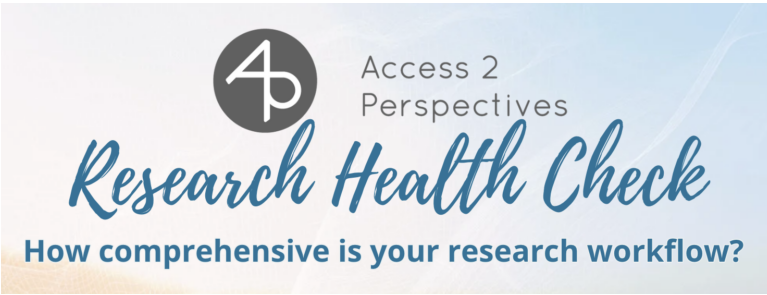
The Research Health Check is a practical resource designed to help researchers assess the robustness, efficiency, and impact of their research practices. It offers tools and guidance to strengthen your workflows, ensure compliance, and maximize your research visibility.
Every researcher deserves the clarity and support to thrive, and this is one step toward that.
Collaboration and Data Management
Collaboration and data management are critical for modern research, especially in global and interdisciplinary contexts. This section examines your experience with managing international collaborations and your familiarity with FAIR principles for research data.
6. (b) #CARE in RDM: Are you familiar with the CARE principles (Collective benefit, Authority to control, Responsibility, Ethics)
for research data management and how to apply it to your own work? If not, what are the barriers?
a) Yes, I apply them regularly
b) Somewhat; I have implemented some aspects of CARE principles, and I face significant barriers
c) I have heard of them, but don’t apply them
d) No, I’m not familiar
Take the full Research Health Check
A2P Course Catalogue
Our training programs are aligned with the UNESCO Open Science Recommendation and adhere to scholarly standards, principles, and best practices that facilitate global collaboration, transparency, and accessibility. We provide customized training and consulting services for researchers, institutions, and organizations.
RESEARCH PROJECT MANAGEMENT
Research Project Management (RDM) is crucial for producing reliable scholarly research outcomes. It involves the thoughtful planning, organizing, and overseeing of research projects from conception to completion, ensuring that objectives are met within time and resource constraints.
3.1. Research Project Management for Global Collaboration
This specialized course focuses on the unique challenges and opportunities in managing globally inclusive research projects, covering strategies for promoting equity and ensuring fair representation in research outcomes.
Contents
❖ The research project lifecycle in a global context
❖ Addressing power imbalances in research collaborations
❖ Project planning and scheduling through inclusive decision-making processes
❖ Equitable Resource allocation and budgeting
❖ Risk management in research projects
❖ Impact assessment for inclusive research practices
Objectives
❖ Understand the challenges of managing globally inclusive research projects
❖ Develop skills in cross-cultural communication and conflict resolution
❖ Learn strategies for promoting equity and diversity in research collaborations
Outcomes
❖ Ability to design and implement inclusive research project management strategies
❖ Skills to facilitate equitable collaborations across diverse research teams
❖ Understanding of inclusive practices in global research contexts
Explore our full Course Portfolio and discover more course topics.