
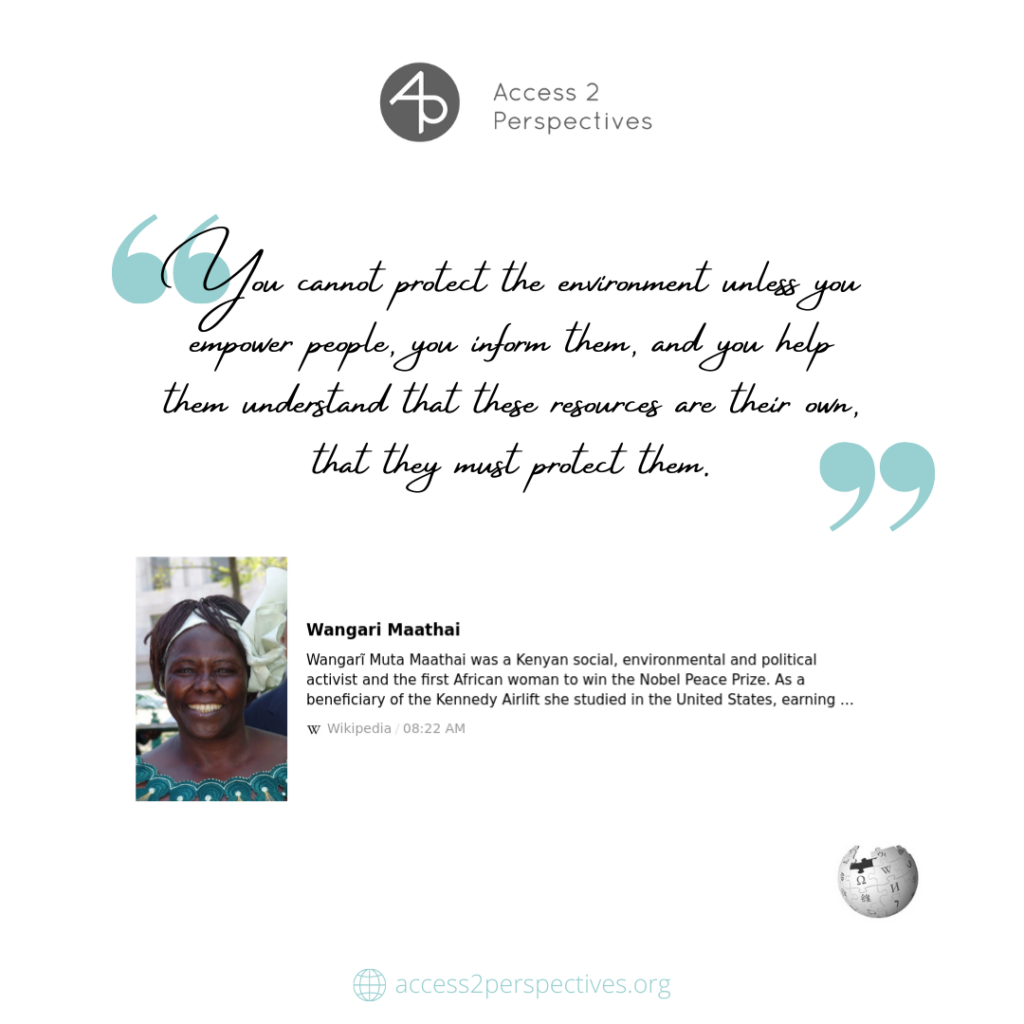
Wangari Maathai: Protect the environment
“You cannot protect the environment unless you empower people, you inform them, and you help them understand that these resources are their own, that they must protect them.”
– Wangari Maathai
“You cannot protect the environment unless you empower people, you inform them, and you help them understand that these resources are their own, that they must protect them.”
– Wangari Maathai
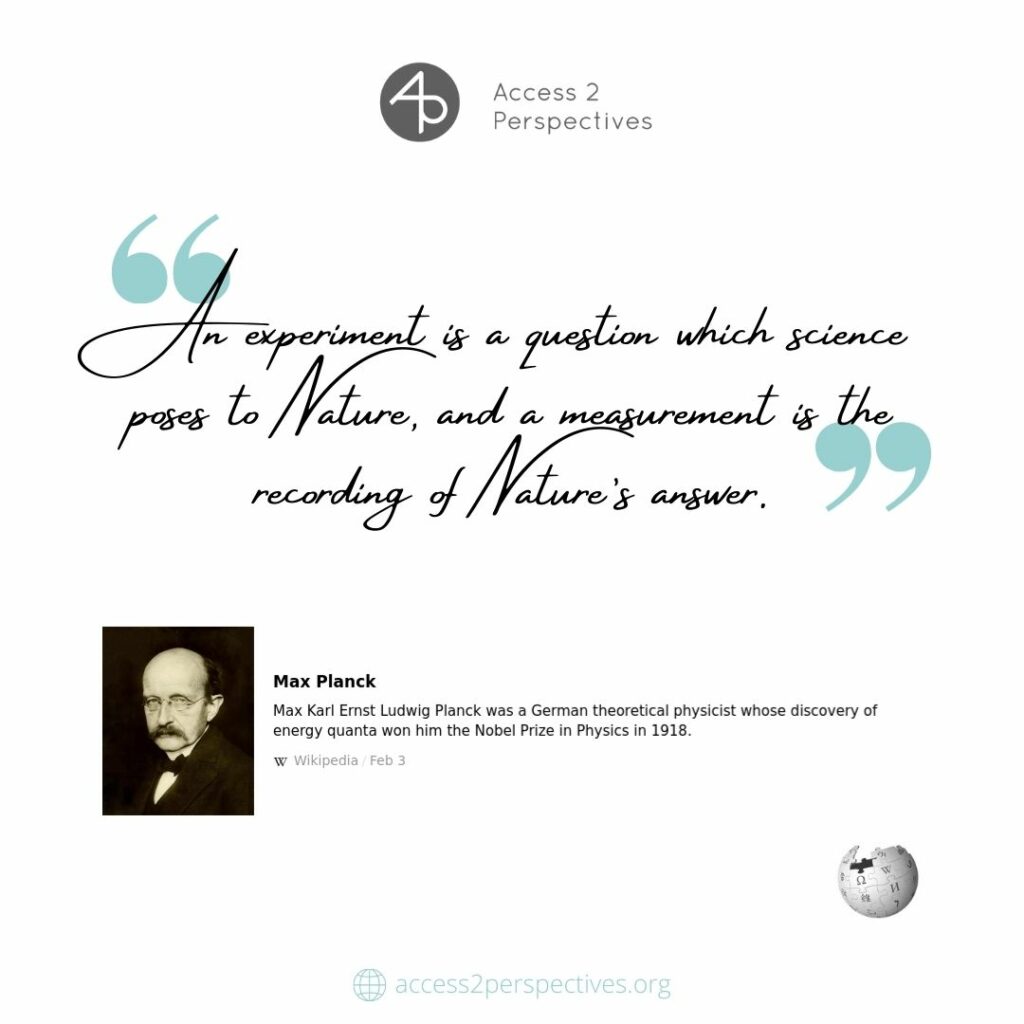
“An experiment is a question which science poses to Nature, and a measurement is the recording of Nature’s answer.”
– Max Planck
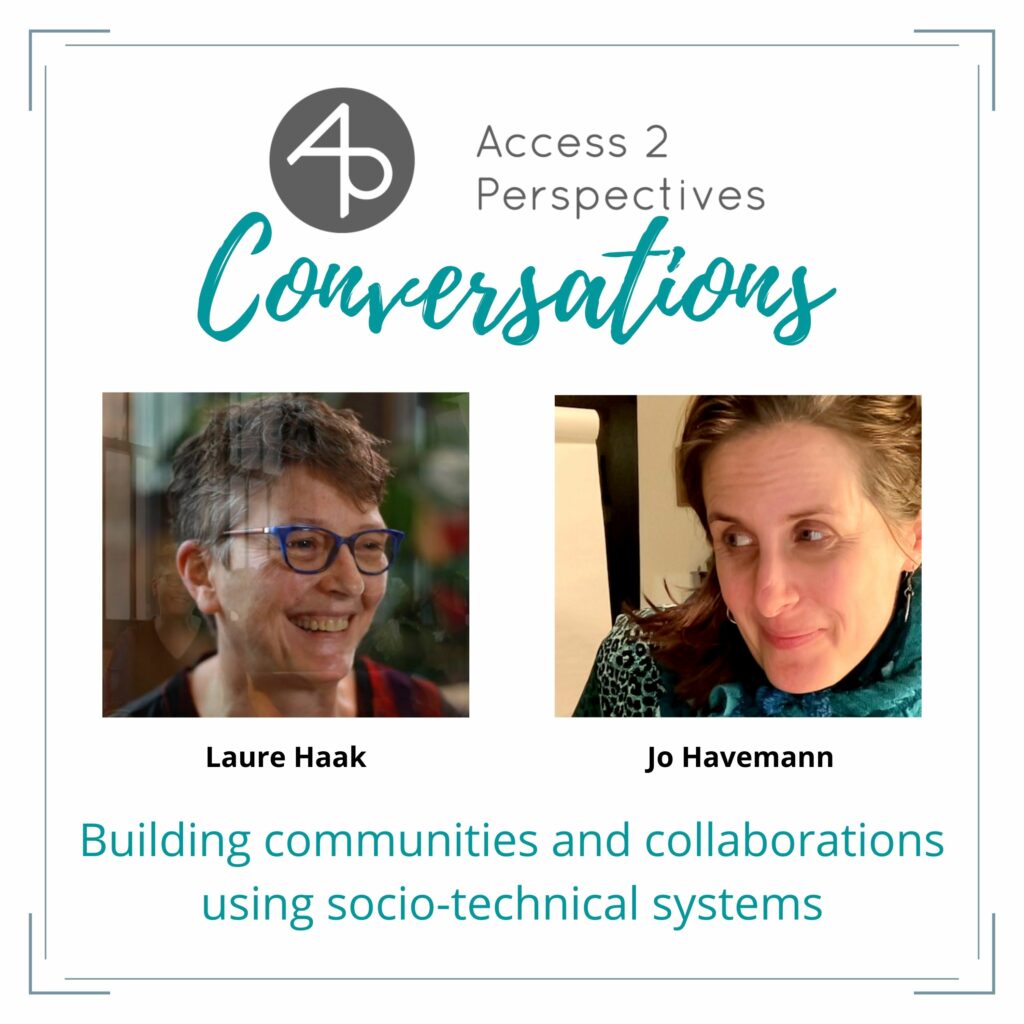
Laure shares steps in her career including her contributions to ORCID as founding executive director that led her towards building the Mighty Red Barn consultancy. We explore the purpose and role of [open] scholarship and respectful community building as well as collaboration in engaging with societal challenges.
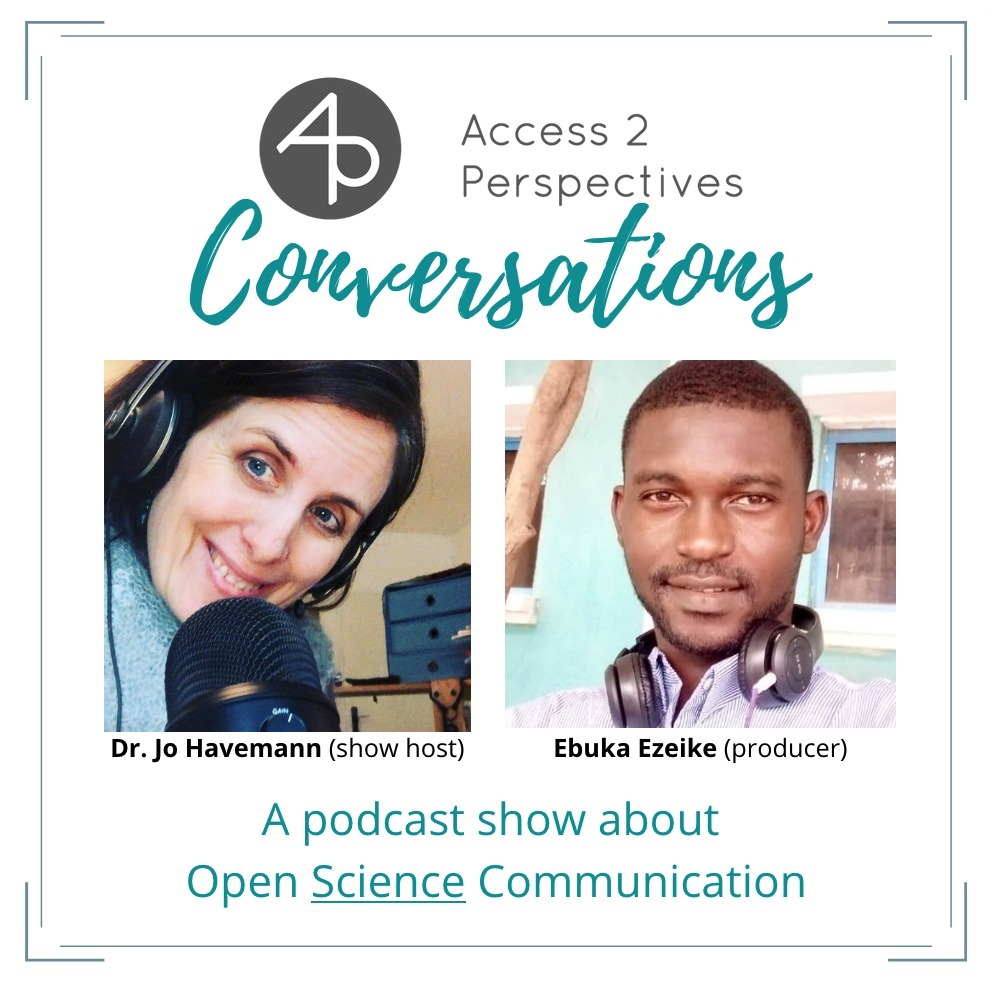
Access 2 Perspectives now hosts conversations around various topics from Open Science to Science Communication.
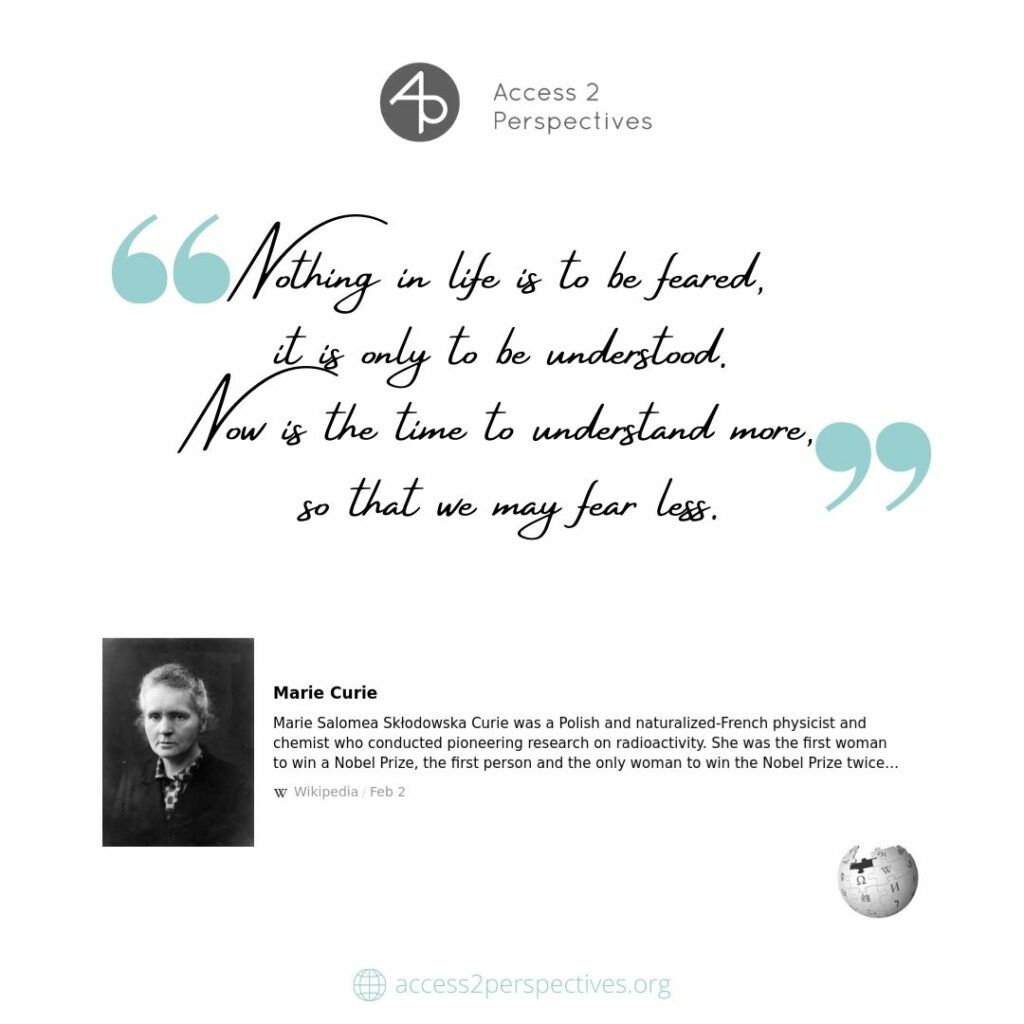
en.wikipedia.org/wiki/Marie_Curie
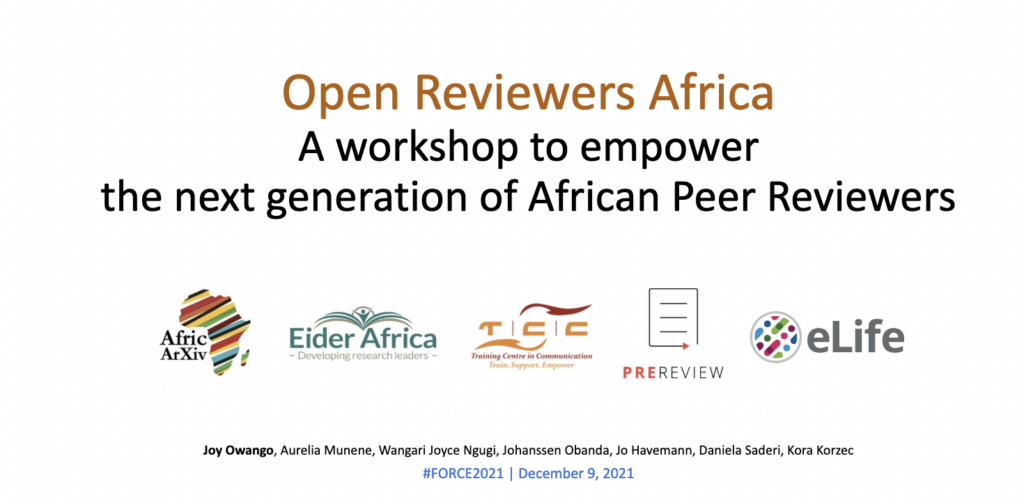
Owango, Joy, Munene, Aurelia, Ngugi, Wangari Joyce, Obanda, Johanssen, Havemann, Johanna, Saderi, Daniela, & Korzec, Kornelia. (2021, December 9). Open Reviewers Africa – A workshop to empower the next generation of African Peer Reviewers. FORCE2021: Joining Forces to Advance the Future of Research Communications. Zenodo. https://doi.org/10.5281/zenodo.5770712
The Training Centre in Communication (TCC Africa), based at the University of Nairobi, Kenya, and the pan-African Open Access portal

In October 2021, AfricArXiv, the African Open Access Portal, announced a partnership with the Training Centre in Communication TCC Africa
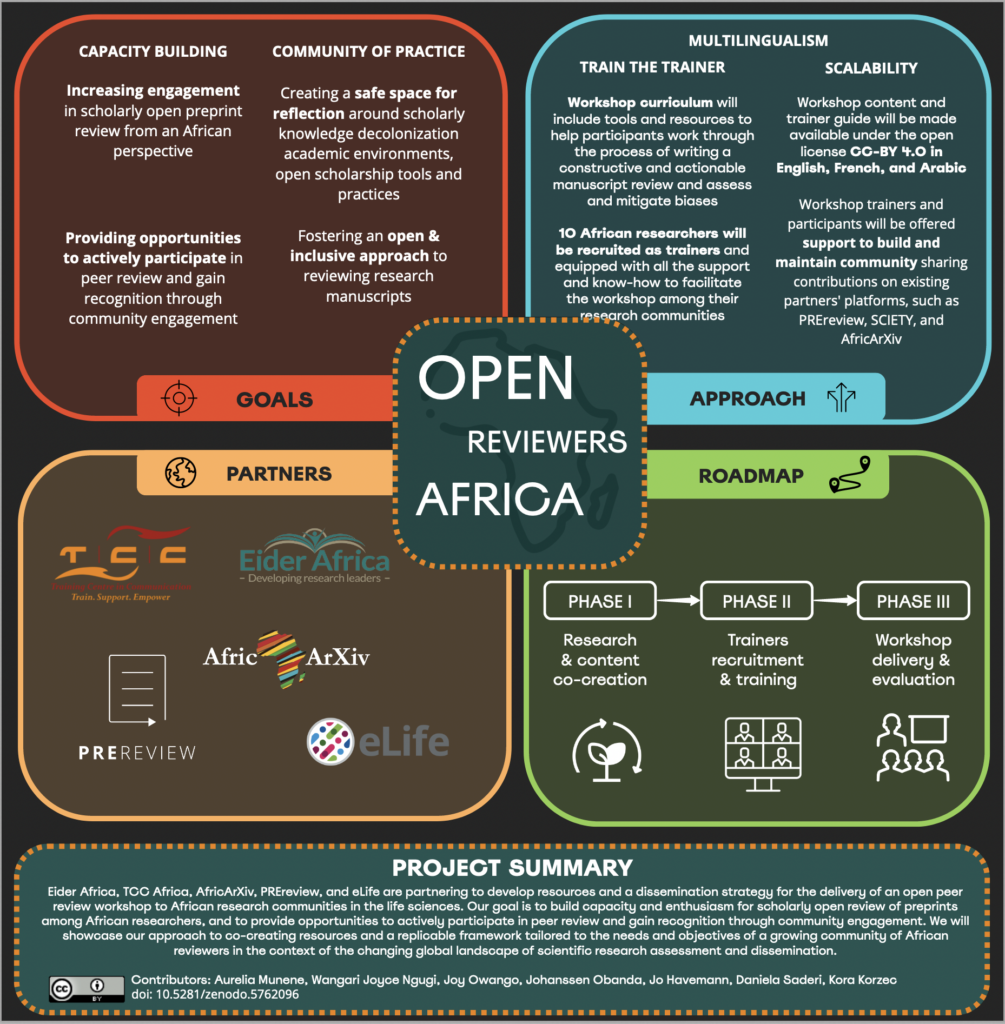
Munene, Aurelia, Ngugi, Wangari Joyce, Owango, Joy, Obanda, Johanssen, Havemann, Johanna, Saderi, Daniela, & Korzec, Kornelia. (2021). Open Reviewers Africa. FORCE2021: Joining Forces to Advance the Future of Research Communications. Zenodo. https://doi.org/10.5281/zenodo.5762096
Eider Africa, PREreview, AfricArXiv, and the Training Centre in Communication (TCC Africa) are working together on a new peer-review training program for early to mid-career researchers in Africa, facilitated by eLife. The course aims to raise awareness around preprints and invite African researchers/scholars to the open review of preprints.